
About
Aaron Siskind (1903–1991) was born in New York City and grew up on the Lower East Side. He worked for twenty-five years as a public school English teacher, taking up photography after receiving a camera as a wedding gift. In the 1930s he joined the New York Photo League, where he founded the Feature Group in 1936, a collective producing socially engaged photographic essays; its most notable project, Harlem Document, combined portraits and street scenes of Harlem with interviews and oral histories gathered under the Federal Writers' Project.
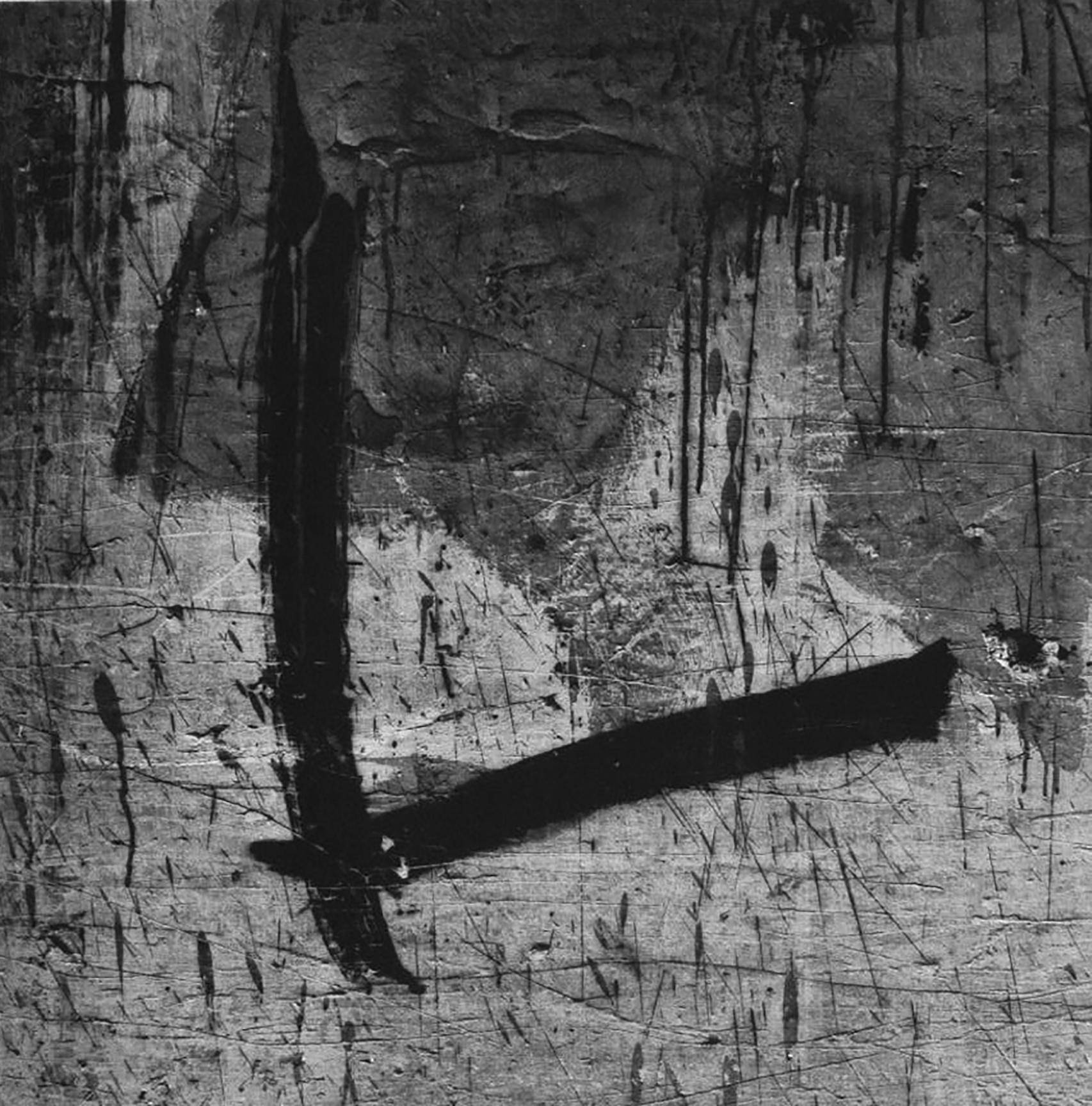
In the 1940s Siskind's work shifted from social documentary toward an increasingly abstract, formal engagement with surface, texture and decay — close-up studies of peeling walls, graffiti, tar-patched pavement and rock formations that isolate found detail as flat, self-sufficient pictorial fields. This body of work brought him into close contact with the Abstract Expressionist painters of New York, including Franz Kline, Mark Rothko and Willem de Kooning, and Siskind is often considered the photographer closest in spirit to that movement.
In 1950 he met Harry Callahan at Black Mountain College, and Callahan subsequently drew him into the faculty of the Institute of Design in Chicago (the former New Bauhaus, founded by László Moholy-Nagy), where Siskind taught for two decades. In 1971 he followed Callahan again to the Rhode Island School of Design, where he taught until his retirement in the late 1970s. He continued to photograph internationally, in Mexico, Peru, Rome and elsewhere, developing further abstract series such as the Tar series, until his death in Providence, Rhode Island, in 1991.
Siskind's photographs entered the collection of the Museum of Modern Art as early as 1941 and have since been featured in dozens of MoMA exhibitions; his work is also held by major institutions across the United States and Europe, cementing his position as a pivotal bridge between documentary photography and post-war abstraction.
Education
- 1926City College of New York
Exhibitions
Solo
- 2017
Aaron Siskind — A Painter's Photographer — Galerie Julian Sander, Cologne
Group
- 2020
Brocante: La Maison de Chineur — Images and Objects from the Gerd Sander Collection — Galerie Julian Sander, Cologne
Links
Biographical information based on galeriejuliansander.de and public sources.
Collections
Museum of Modern Art, New York